The churches of Praiano: hidden treasures between art and spirituality
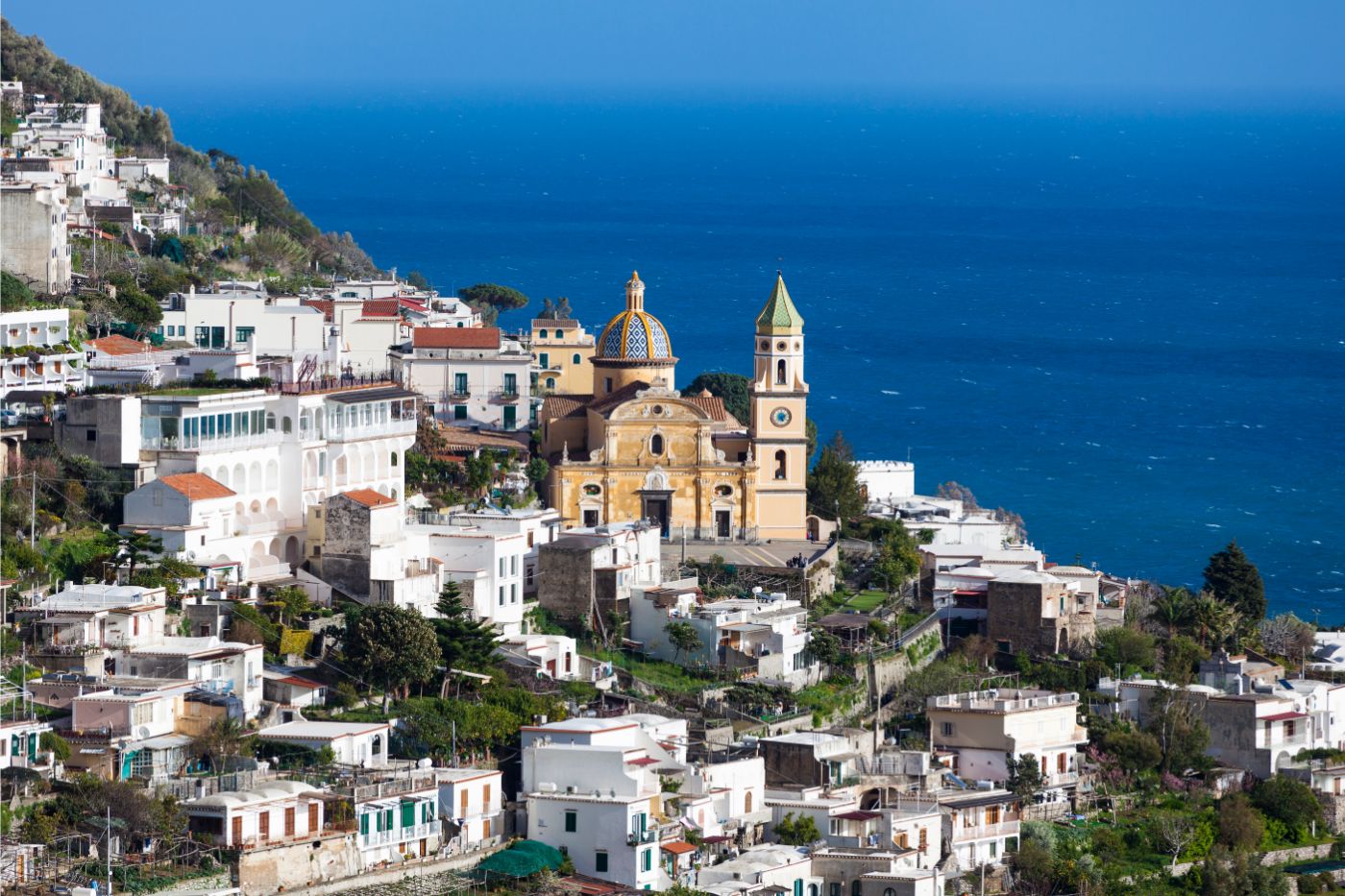
Praiano preserves a religious heritage of extraordinary beauty that tells centuries of devotion and craftsmanship. Its churches represent far more than simple places of worship: they are treasure chests in which architecture, art and popular tradition coexist. Domes covered in colourful ceramics that glitter in the sun, fine portals and interiors adorned with majolica floors, gilded stucco and works of art all blend in a harmony that reflects the authentic soul of the Amalfi Coast. Discovering these treasures means embarking on a journey into the spiritual and artistic heart of Praiano.
Below is an overview of the main churches on the territory.
Church of San Luca Evangelista
Located just a few steps from our boutique hotel, the Church of San Luca Evangelista is dedicated to the patron saint of Praiano (celebrated with solemn festivities twice a year, on the first Sunday of July and on 18 October). It was built in 1588 on a previous structure dating back to 1123, but what we can admire today is the result of an eighteenth-century reconstruction. It stands out for its majolica dome set directly onto the apse, something very rare on the Amalfi Coast. The interior is enriched by a magnificent eighteenth-century Vietri majolica floor decorated with flowers and birds framing the image of Saint Luke, and by fine works of art, among which stand out the panel paintings of the Circumcision, the Madonna of the Rosary and the Immaculate Conception, by Giovanni Bernardo Lama, Padovano De Montorio and Silvestro Buono respectively.
Church of San Gennaro Vescovo e Martire
Located in the square of the same name (approximately one kilometre from our boutique hotel), the Church of San Gennaro Vescovo e Martire is one of the most beautiful religious buildings on the entire coast. It was erected between 1589 and 1602 on the foundations of a previous church, also dedicated to San Gennaro. However, its current appearance is the result of various reconstructions and alterations that have taken place over time. Its most distinctive feature is the oval dome decorated with colourful majolica tiles in the traditional Amalfi style. Inside, noteworthy elements include: the majolica floor (the original from 1771 was replaced by a copy in 1966) reproducing polychrome geometric patterns and floral motifs in very vivid colours; the canvas depicting the martyrdom of Saint Bartholomew, painted by Giovan Battista Lama in 1747; and the Last Supper by Francesco Saverio Corbelli, dated 1761.
Church of Santa Maria del Castro
The Church of Santa Maria del Castro, together with its adjoining convent, stands on the slopes of Monte Sant’Angelo a Tre Pizzi at an altitude of 364 metres above sea level, from which a magnificent panoramic view can be enjoyed. There are no precise records of the origins of this sacred site, but its founding must be very ancient, as suggested by the presence of a stone altar identified by scholars as a pagan sacrificial table. For centuries, a fresco known as the Madonna delle Grazie has been venerated here, housed in the apse of the left nave. The work is arranged on two registers: in the upper part, the blessing Christ of Byzantine influence, flanked by Saints Peter and Paul with angels; in the lower part, the enthroned Virgin with Child, surrounded by angelic figures and saints. The church lies along the evocative route of the Path of the Gods.
Chapel of Santa Maria di Costantinopoli
The Chapel of Santa Maria di Costantinopoli in Praiano is a small architectural gem standing in an isolated position in the upper part of the town. It is mentioned from the eighteenth century onwards as a meeting place for the liturgical gatherings of the Confraternity of the Most Holy Rosary. It features an elegant Renaissance-style façade (enriched by baroque interventions over time) with a wide portal and delicate stucco decorations, overlooking a broad terrace-forecourt. A stucco statue of the Madonna di Costantinopoli is placed in a niche above the entrance, while the high altar is dominated by a canvas depicting the Madonna di Costantinopoli together with Saints Roch and Sebastian, with the city of Constantinople marked by destruction in the background.
Other places of worship
Alongside the religious buildings already described, other places of worship — more intimate but no less evocative — are tucked away among the alleyways and staircases of Praiano. These include: the Church of San Tommaso, first mentioned in 1593, which houses an altarpiece depicting the Madonna and Saint Thomas Aquinas (c. 1500) and a large Neapolitan-school crucifix (1770); the seventeenth-century Chapel of San Nicola, equipped with a fine organ, a Neapolitan work from 1700; and the Church of San Giovanni Battista, dating back to the eleventh and twelfth centuries, adorned with a splendid Neapolitan-school majolica floor from 1790.
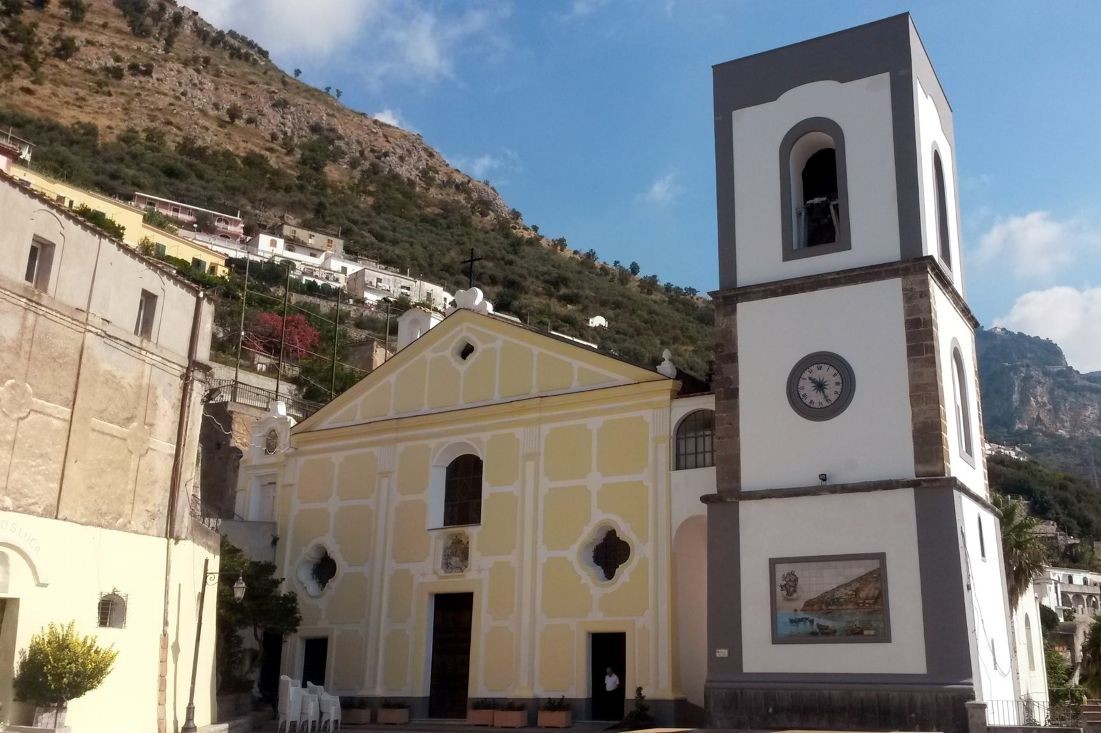
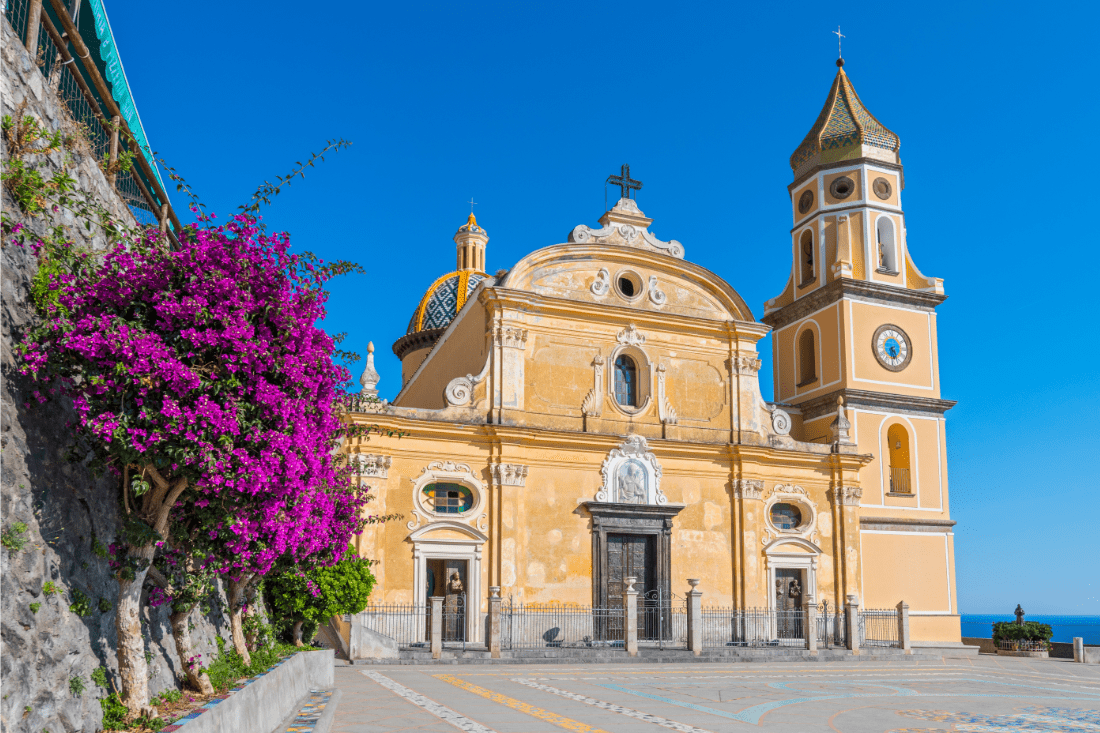
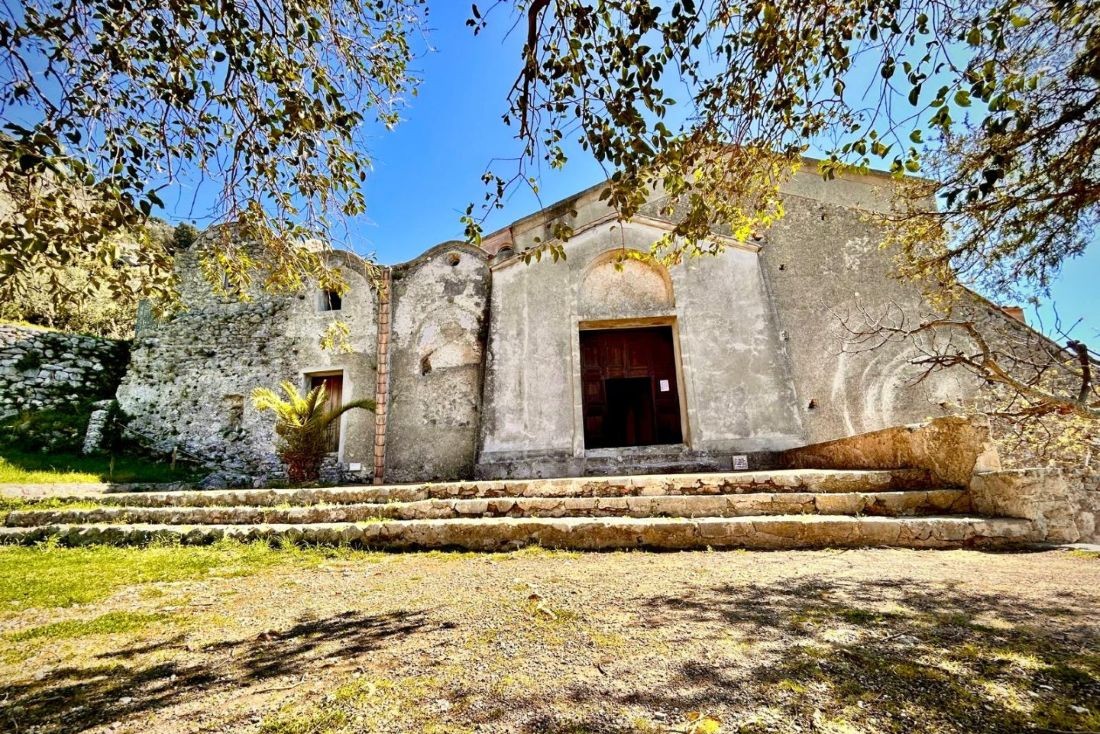
Photo gallery © (1) Parrocchia San Luca Evangelista Praiano


