The Feast of Sant’Andrea in Amalfi
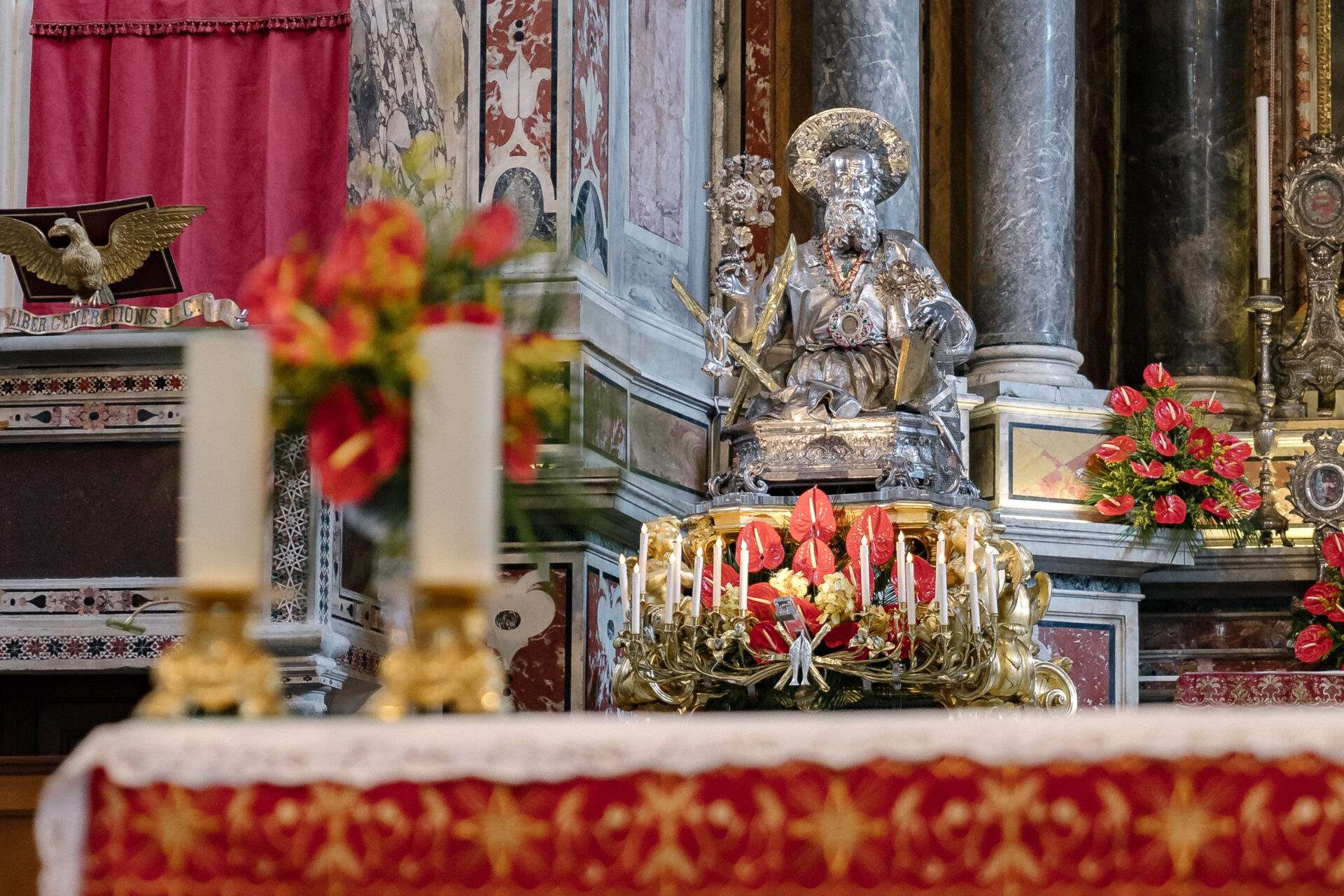
Some celebrations are not merely watched — they are lived. The Feast of Sant’Andrea, patron saint of Amalfi, is one of them. Twice a year, on June 27th and November 30th, the city transforms into an open-air stage where spirituality, history, and spectacle merge into a single, overwhelming experience. Faithful devotees, travellers, and folklore enthusiasts flock from every corner of the world to experience it at least once. And those who do, never forget it.
Who is Sant’Andrea and why is he so beloved in Amalfi
Sant’Andrea the Apostle, brother of Saint Peter, has been the patron saint of Amalfi for centuries, and the bond between the city and its saint is something visceral, going far beyond simple religious devotion. His relics were transferred to Amalfi in 1208 by Cardinal Pietro Capuano, a native of this very land, following the Crusaders’ conquest of Constantinople. From that moment on, the city has jealously kept them in the crypt, beneath the main altar, of its majestic Cathedral.
But Sant’Andrea is not only Amalfi’s spiritual symbol — he is also the protector of fishermen and seafarers. In a land of sailors, fishermen, and merchants who for centuries sailed the Mediterranean, this protection carries a deep meaning, rooted in the soul of every Amalfitan.
The celebrations
The Feast of Sant’Andrea is celebrated twice a year, and each occasion has its own unique character.
The June 27th feast is the most spectacular. It commemorates a miraculous event from 1544, when a violent storm — attributed to Sant’Andrea’s intervention — saved Amalfi from an assault by the fearsome Saracen pirate Ariadeno Barbarossa. Since then, every year, the city relives that moment of divine protection through a celebration that weaves together devotion and spectacle.
November 30th, the liturgical feast day of the saint, coinciding with his death, sees Amalfi honour its patron in a more intimate and collected atmosphere, though no less heartfelt.
The heart of the feast: Amalfi Cathedral
The focal point of the celebrations is the Cathedral of Sant’Andrea, which dominates Piazza Duomo with its dramatic staircase and monumental polychrome façade. The complex comprises two originally separate structures: the cathedral itself, built from 987 onwards, and the ancient Basilica of the Crucifix. Predominantly Arab-Norman Romanesque in style, it also features elements ranging from Baroque to Rococo. Here the solemn Mass is held, in the presence of both dignitaries and faithful, and from here the procession carrying the statue of the saint departs.
The procession, the staircase run, and the fireworks over the sea
The statue of the saint — a precious silver sculpture in the Neapolitan Baroque style, affectionately known to Amalfitans as “o’ viecchio” (“the old one”) — is carried in procession through the city’s streets, accompanied by chants, prayers, and a moved crowd pressing close along the route.
One of the most eagerly awaited — and most stirring — moments is the carrying of Sant’Andrea’s statue at a run up the Cathedral staircase, to the applause of the crowd. It is a gesture that unites physical strength, devotion, and tradition, and one that leaves both residents and visitors breathless every year.
The day culminates late in the evening with a breathtaking fireworks display over the sea, illuminating the entire Coastline and turning the night sky into an unrepeatable painting.
Why you should experience the Feast of Sant’Andrea in Amalfi
Those who visit Amalfi during these days do not simply witness a religious celebration — they come into contact with the city’s truest identity. The feast is a journey through its thousand-year history, an encounter with a popular spirituality lived with pride and passion, and an opportunity to discover the most authentic traditions of the Amalfi Coast. One of those events that stays with you, because it tells the story of Amalfi in the most genuine and profound way possible.
Photo © Visit Amalfi


