The Roman Villa of Positano opens its new excavations to the public
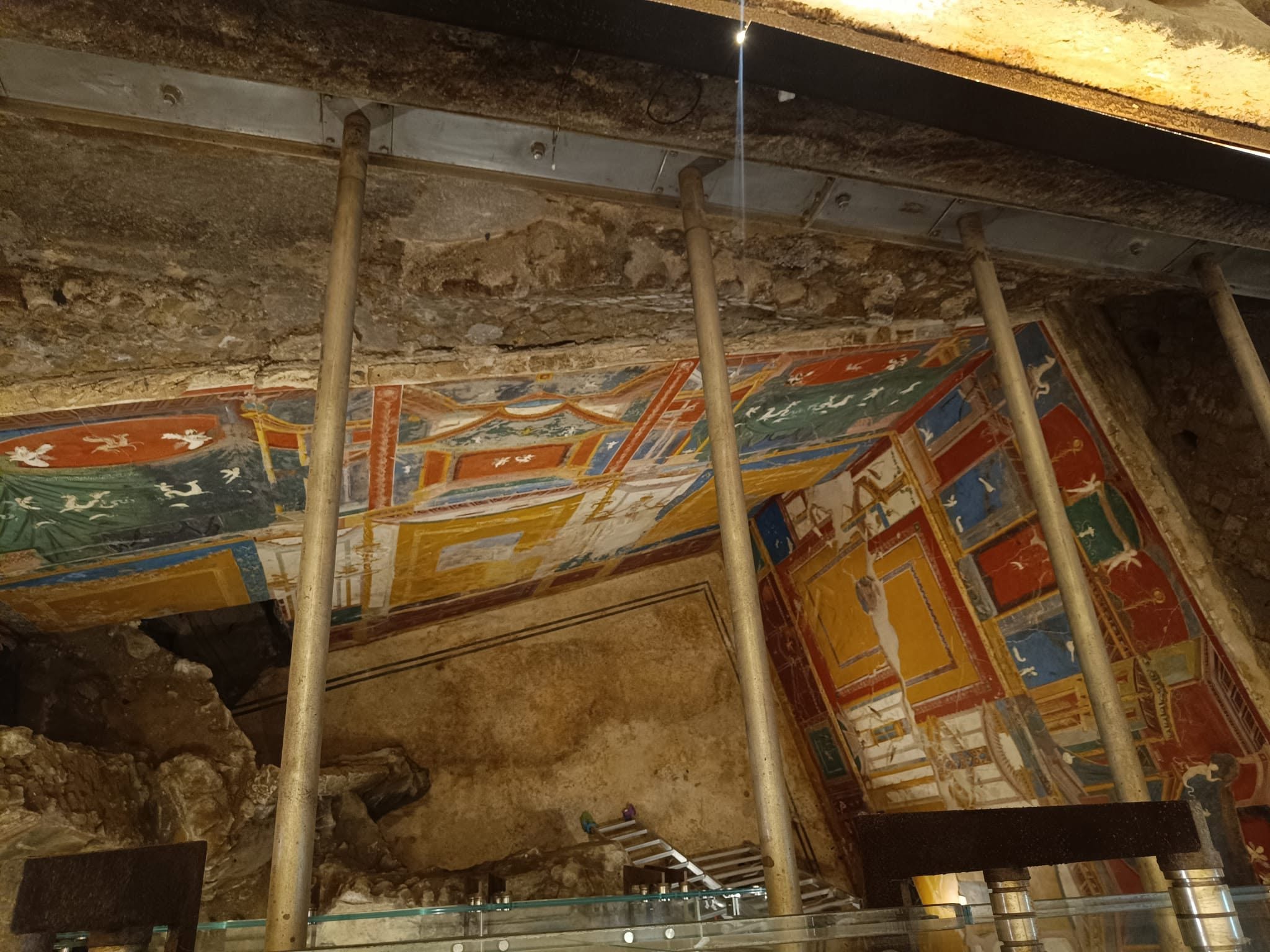
The area of the new excavations at the Roman Villa of Positano will be opened to the public by the end of September as part of the innovative “transparent archaeological site” project. The opening was announced by Mayor Gabriella Guida and Anna Onesti, Superintendent of Archaeology, Fine Arts and Landscape (ABAP) for the provinces of Salerno and Avellino, during the 54th edition of the “Léonide Massine” Dance Award.
The visit will therefore include a new section designed not only for tourists but also for educational activities. The finds unearthed during the excavations will gradually be presented on site, allowing visitors to follow the latest discoveries at close range.
The work, which began only a few months ago, has already brought to light findings of particular interest. Among the first discoveries is a section of wall built using opus mixtum, a Roman construction technique characterised by the vertical arrangement of the bricks, which is already attracting the attention of scholars.
Located beneath the Church of Santa Maria Assunta, the Roman Villa of Positano is part of MAR Positano – Roman Archaeological Museum. Dating from between the 1st century BC and the 1st century AD, it belongs to the category of “maritime” villas, similar to those found on Capri and the numerous villas scattered along the coast. Even in Roman times, the Amalfi Coast was considered a sought-after holiday destination, where wealthy Romans could devote themselves to otium and enjoy the exceptional natural beauty of the area.
The villa was irreversibly damaged by the eruption of Mount Vesuvius in AD 79, while restoration work was still underway to repair the damage caused by the earthquake of AD 62. It was discovered in 2003 during restoration work in the church crypt, which brought the remains of the residence to light. However, the presence of ancient remains beneath the church had been documented for some time. In the second half of the 18th century, Karl Weber, who was involved in the Bourbon excavations, had already described a building decorated with frescoes and mosaics. According to some theories, the villa may have belonged to the freedman Posides Claudi Caesari, whose name may have given rise to the name Positano.
The building preserves several features typical of Roman residences from the Imperial period, including a rich decorative scheme. Particularly noteworthy are the frescoes in the triclinium, whose colours and details are still clearly visible and which belong to the so-called Fourth Style, developed around the middle of the 1st century AD. Other finds include stucco decorations, mosaic floors, columns and numerous objects associated with everyday life.
Photo © MAR Positano – Roman Archaeological Museum


